Publications & Presentations
Publications
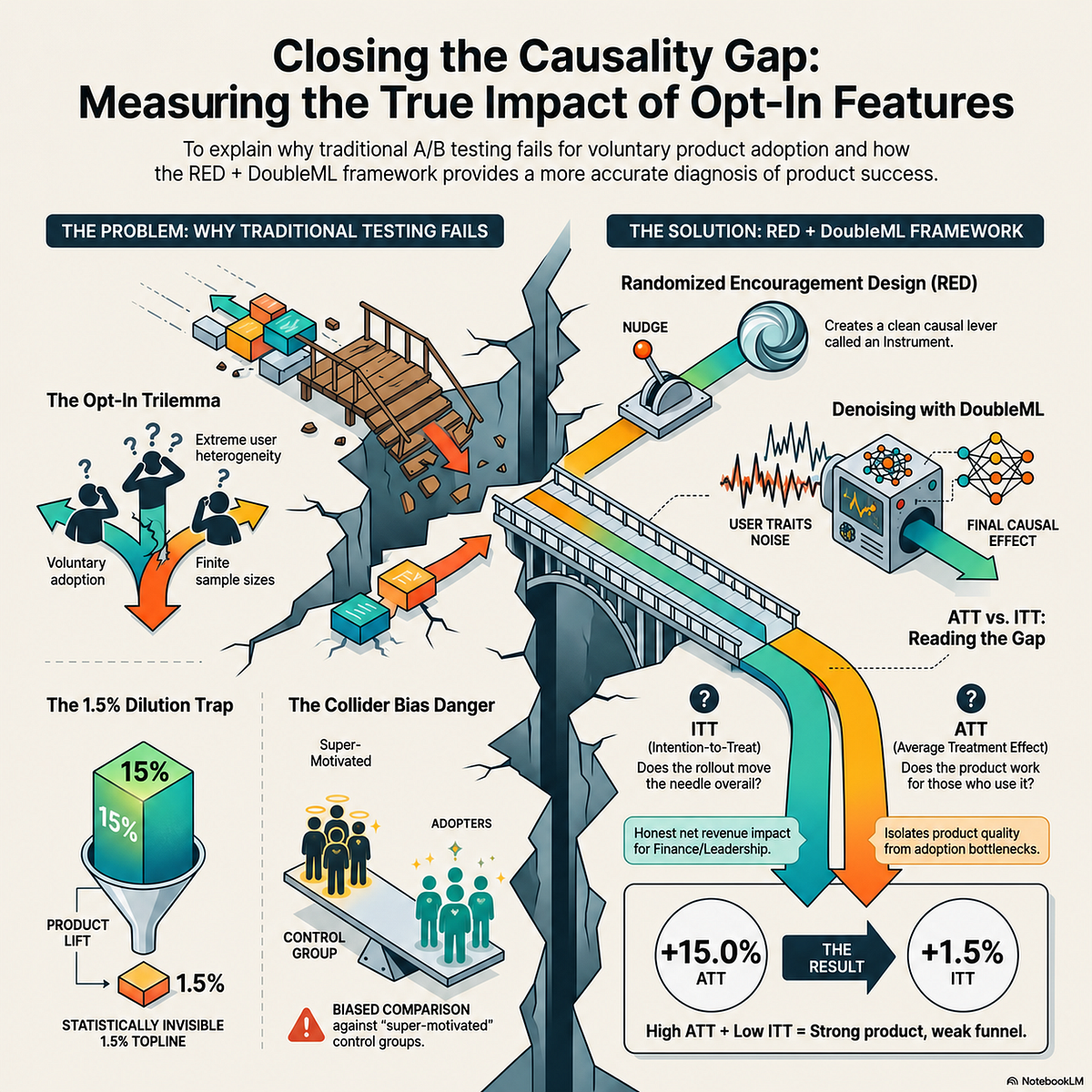
The Causality Gap: Measuring the True Impact of Voluntary Adoption in Digital Marketplaces (2026)
Authors: Lin Jia, Kexin Fei
Published in: Booking.ai
In digital marketplaces where users opt in to features voluntarily, naïve adopter-vs-non-adopter comparisons confound self-selection with treatment effect. This article presents a causal-inference framework for closing that gap and measuring the true impact of opt-in features across both demand and supply sides of the platform.
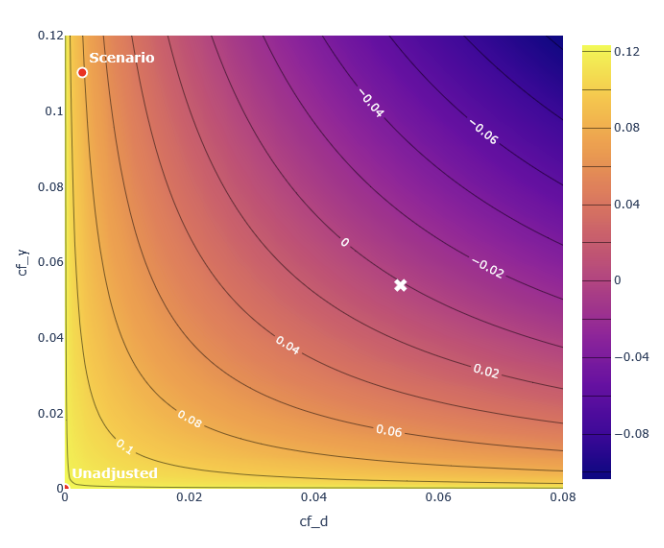
Sensitivity Analysis for Causal ML: A Use Case at Booking.com (2024)
Authors: Philipp Bach, Victor Chernozhukov, Carlos Cinelli, Lin Jia, Sven Klaassen, Nils Skotara, Martin Spindler
Conferences: Knowledge Discovery in Databases (KDD) 2024
Causal Machine Learning enables flexible estimation of causal effects from observational data, but its validity hinges on untestable assumptions like the absence of unobserved confounders. This paper emphasizes the importance of sensitivity analysis in assessing the robustness of causal findings when such assumptions may be violated, illustrating its practical relevance through a Booking.com use case.
• Presented at KDD 2024 Workshop - Causal Inference and Machine Learning in Practice
• Presented at Causal Data Science Meeting 2024
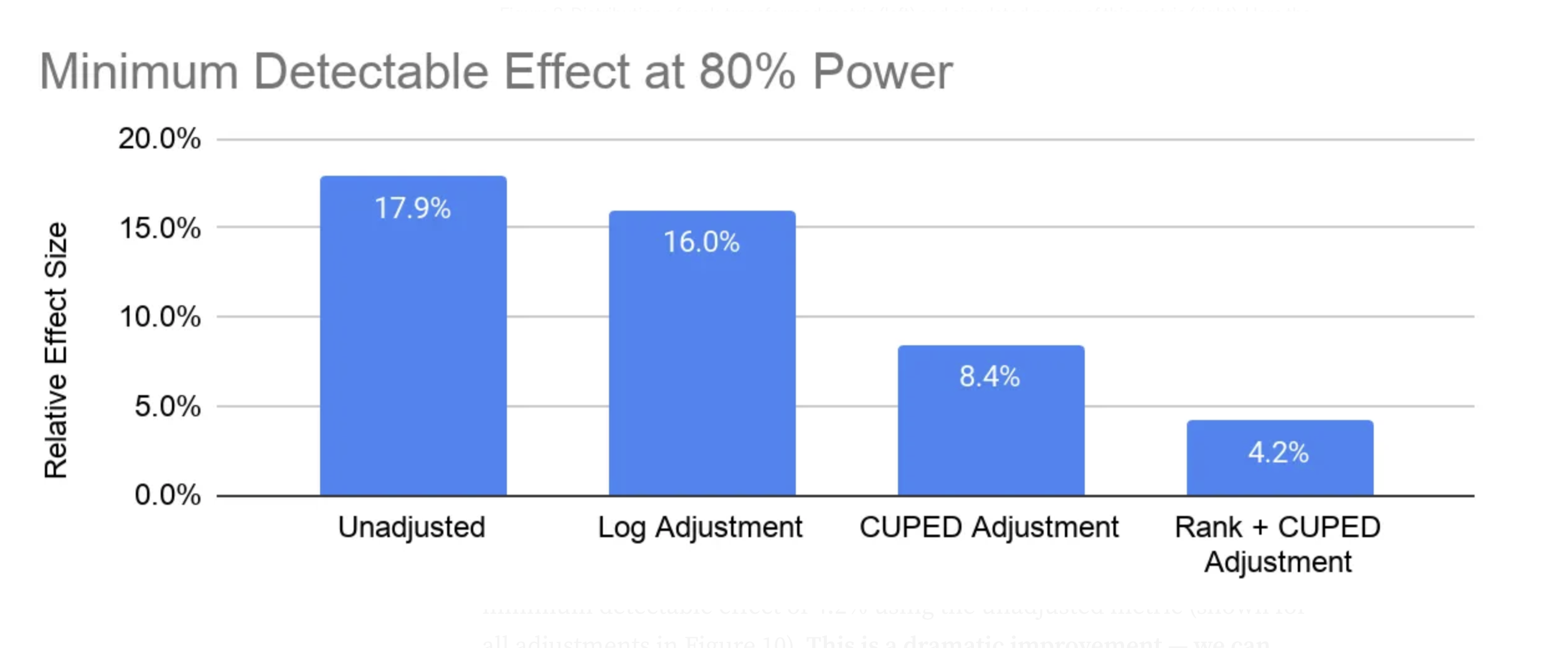
Increasing the sensitivity of experiments with rank transformation
Authors: Lin Jia, Sam Bailey Published in: Booking.ai
At Booking.com, even small improvements in key metrics can drive significant business value, making experimental sensitivity crucial. This work introduces applying t-tests on ranked data—a method conceptually similar to the Mann-Whitney U test—to enhance sensitivity in A/B tests with highly skewed metrics, emphasizing the importance of understanding data distributions, business goals, and simulation-based validation when selecting statistical methods.
Recent Talks
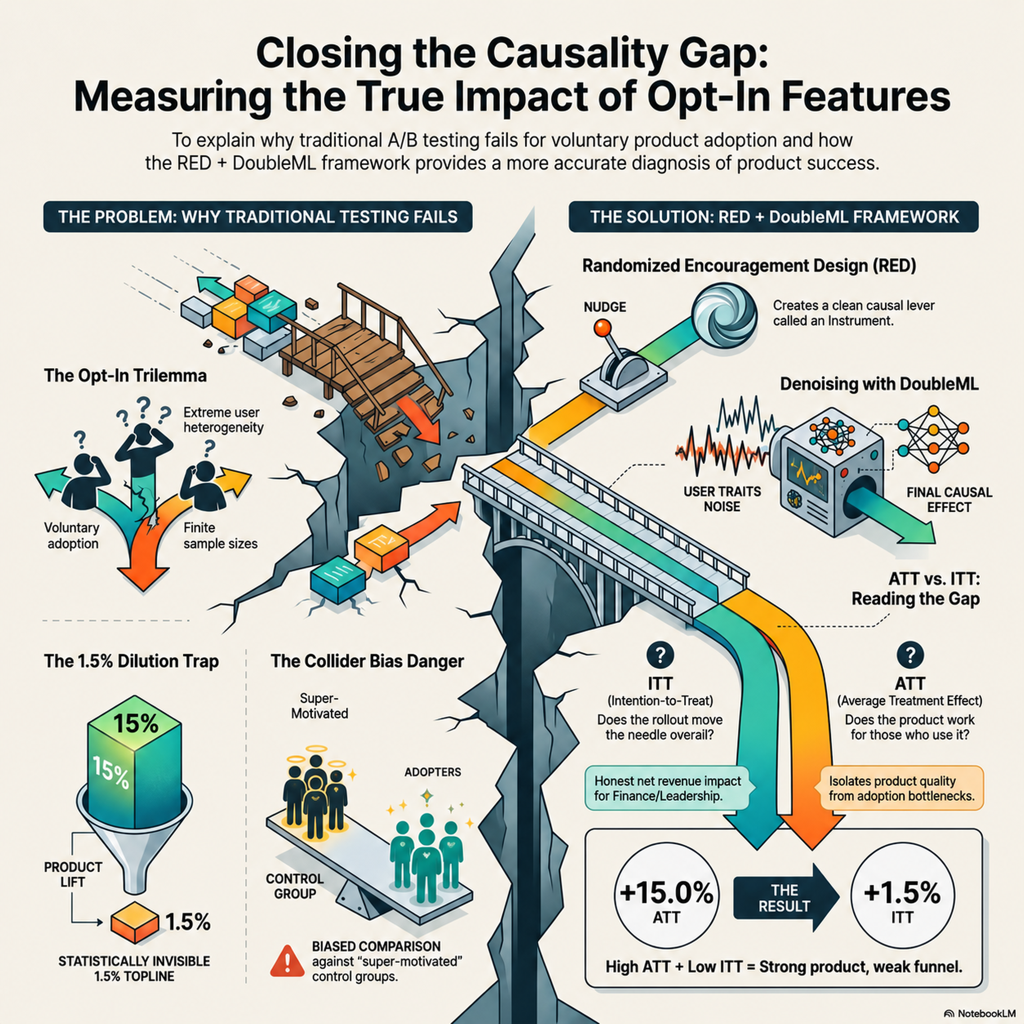
The A/B Testing Blind Spot: Solving the Opt-In Paradox with Randomized Encouragement and DoubleML
PyData Amsterdam 2026 · Amsterdam · 11 September 2026
With Kexin Fei. Features that users must opt in to (claiming a discount, enabling a pricing tool, switching on instant booking) defeat the standard A/B test: the offer is randomised, adoption is not, and the intent-to-treat effect is diluted across everyone who never opted in. Comparing adopters to lookalike non-adopters does not fix it, because adoption is a collider and motivation drives both adoption and the outcome. This talk shows how the randomised offer doubles as an instrument in a Randomized Encouragement Design, how Double Machine Learning with Tweedie learners handles the heterogeneity and skew of marketplace data, and how one experiment then recovers both the offer effect and the true adoption effect, illustrated with Python simulations and a Booking.com case study.
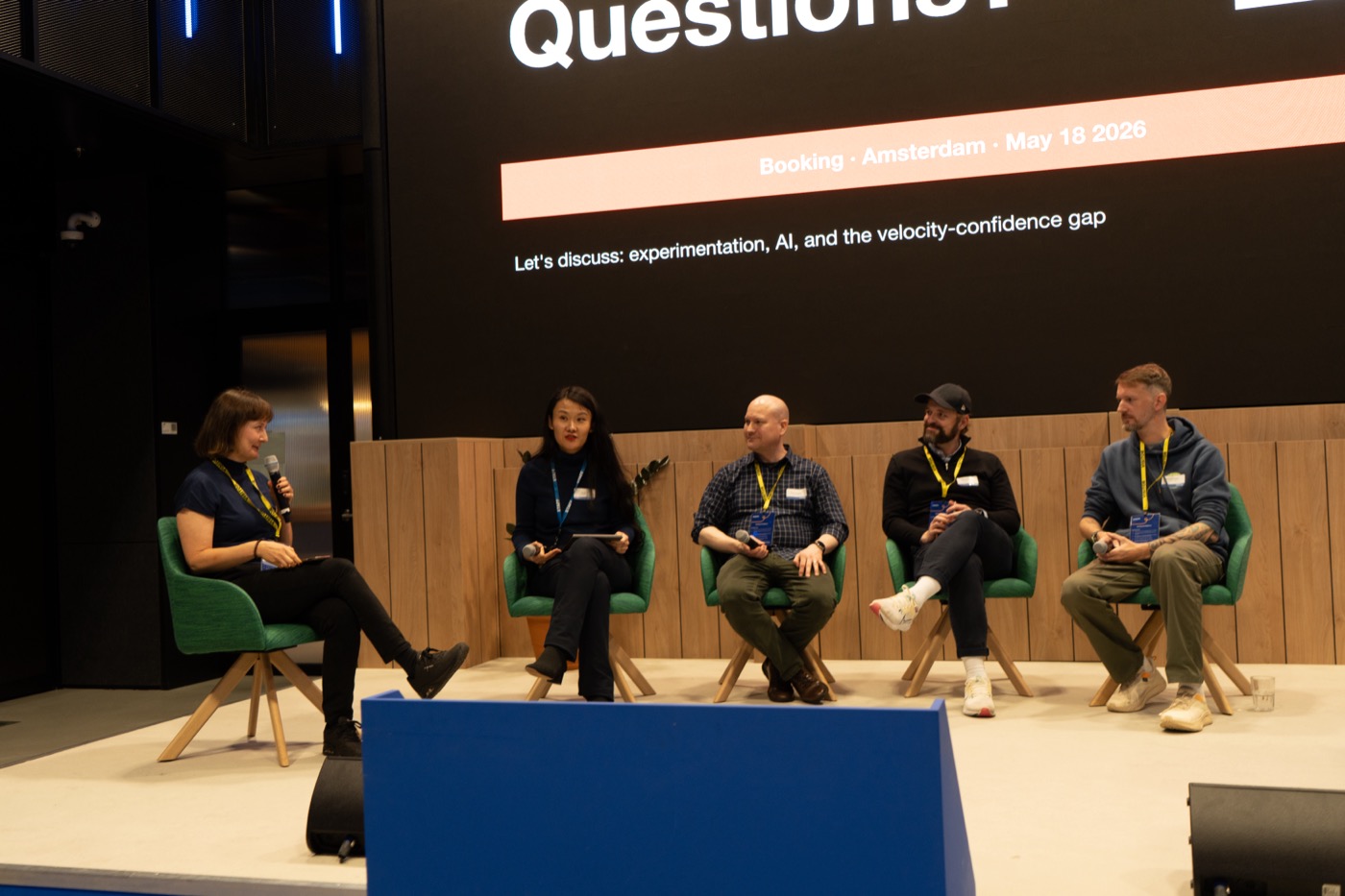
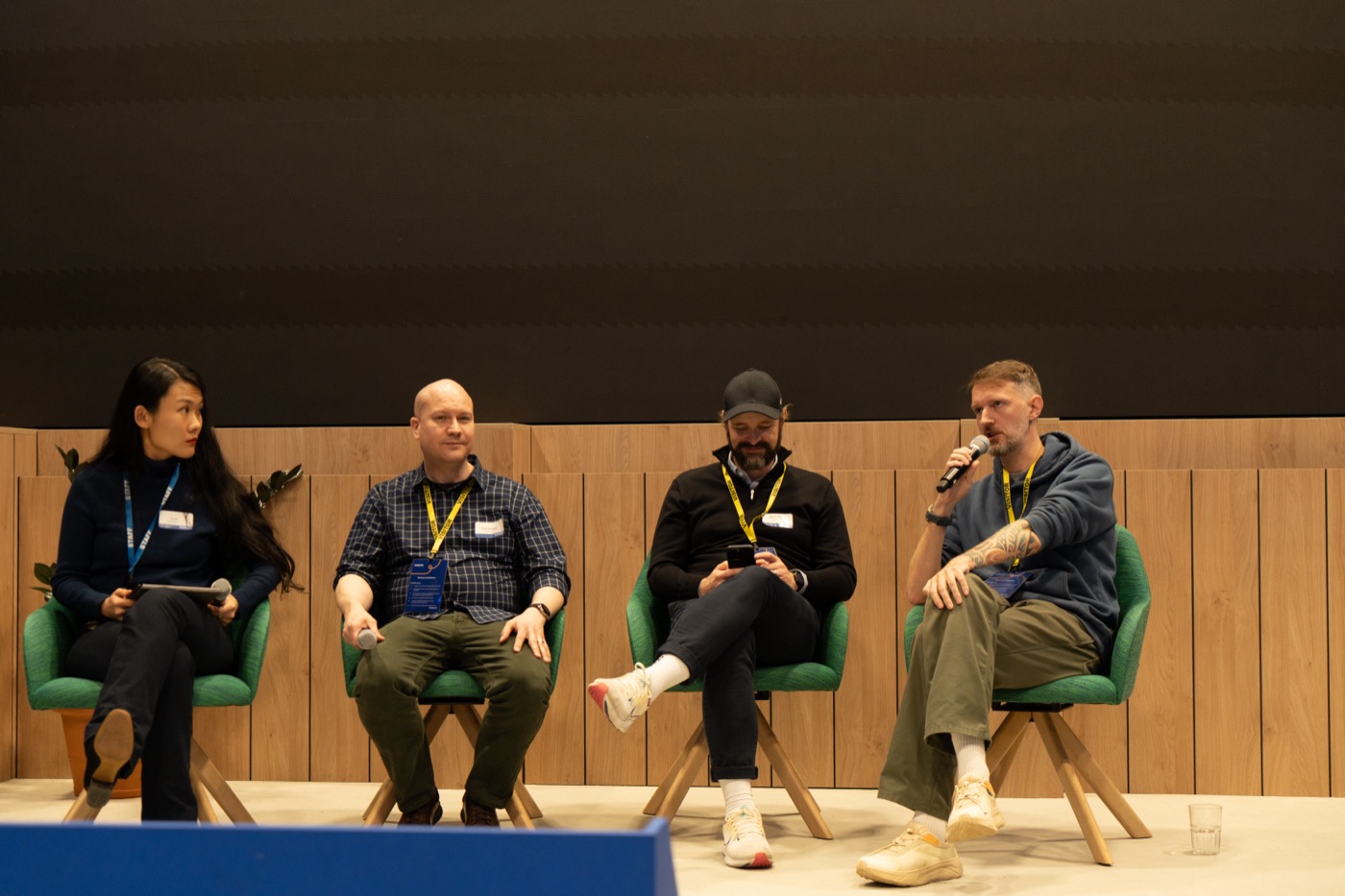
Panel: AI in Experimentation
3rd Booking.com Experimentation Conference · Amsterdam · May 2026
Panelist alongside David Gregory (Skyscanner), Marcel Toben (Zalando), and Dima Bordiugov (Delivery Hero), moderated by Gosia Popławska (Netflix), on how GenAI is reshaping experimentation — from copilots and experimentation memory to evaluation, trust, and decision-making. The discussion emphasized starting from the problem rather than the technology; that the most important experimentation trade-offs — across business impact, user experience, uncertainty, and long-term trust — remain fundamentally human judgments; and why maintaining measurement rigor matters more as velocity increases, not less.
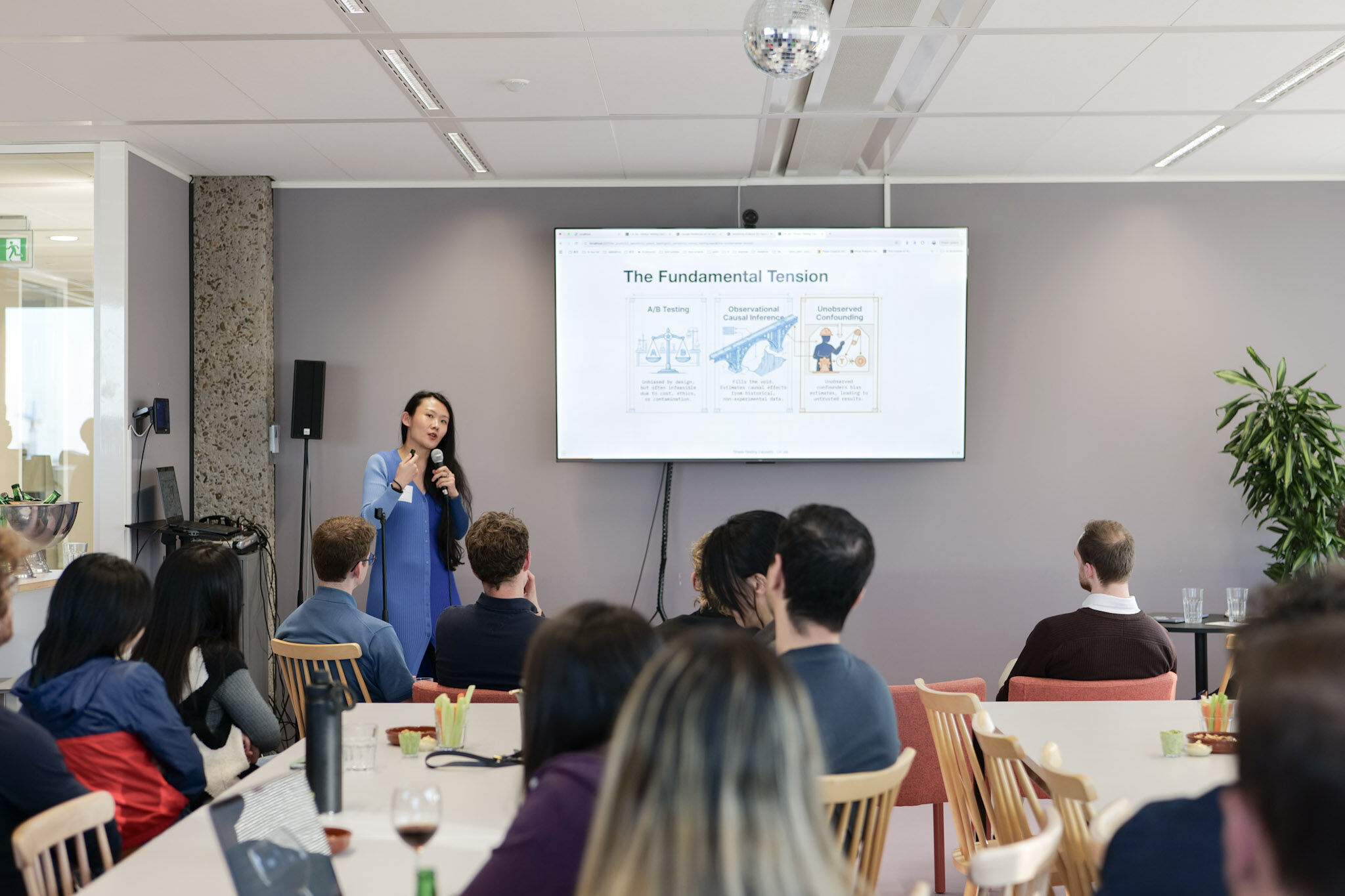
Stress-Testing Causality: A Pragmatic Guide to Sensitivity Analysis in Causal ML
Causal Inference Tech Meetup · hosted by ADC Consulting · Amsterdam · April 2026
Invited talk at ADC Consulting’s first Causal Inference Tech Meetup. Observational causal inference rests on untestable assumptions about hidden confounders. This talk presents a four-step workflow for stress-testing causal claims with the DoubleML omitted-variable-bias framework — robustness values, benchmarking against observed controls, and the limits of what sensitivity analysis can and cannot tell you.
Tutorial: Robust and Streamlined causal analysis with Causal Inference Framework
PyData London 2024
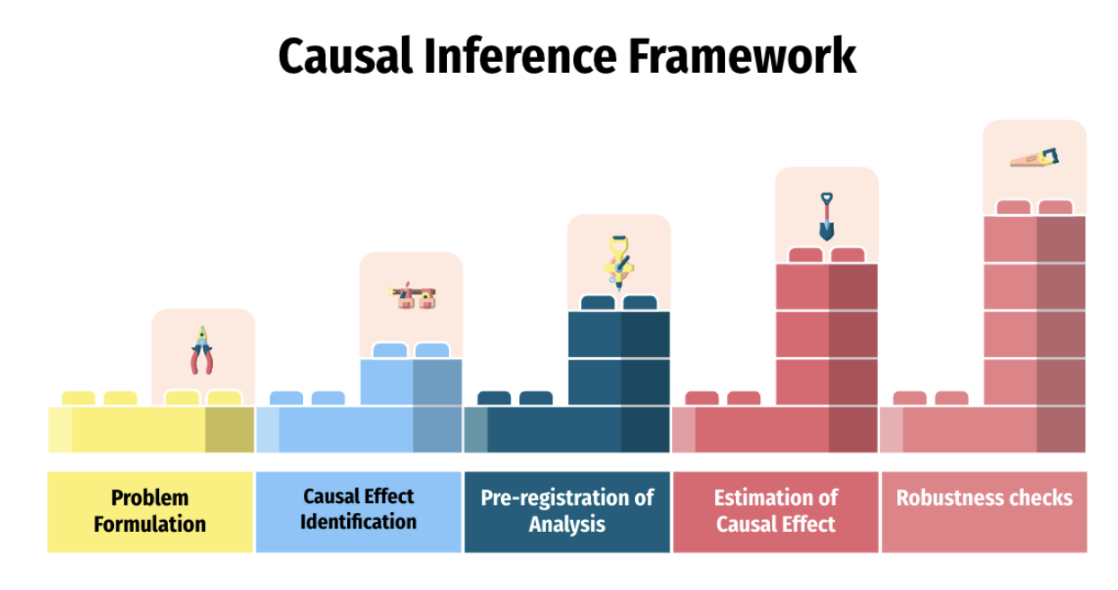
Measuring causal impact is central to data-driven decision-making at Booking.com, yet A/B testing is not always feasible. This tutorial introduces a comprehensive causal inference framework that integrates academic insights with real-world business needs, providing data scientists with a structured, step-by-step approach to conduct robust, transparent, and consistent causal analyses across the full analytical lifecycle.
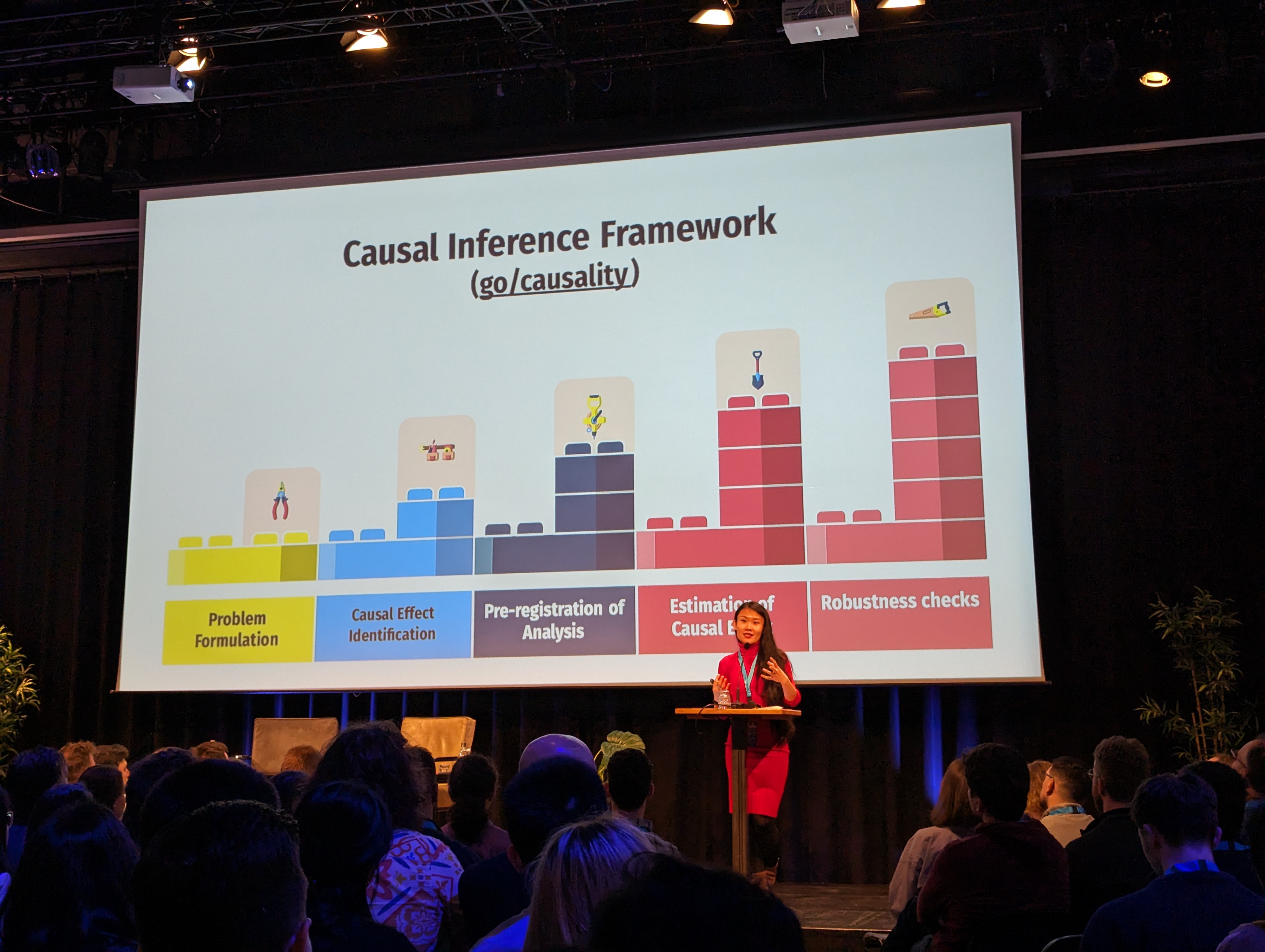

Unlocking incrementality: Enhancing Business Decisions through robust causal inference at Booking.com
Keynote Speech at Booking.com Science & Analytics Conference 2024
At Booking.com, a comprehensive causal inference framework has been developed to measure product impact beyond A/B testing by integrating academic rigor with practical business needs. The framework outlines five essential steps—from problem formulation to robustness checks—providing a systematic, transparent, and holistic approach that bridges experimental and observational methods to support robust, data-driven decision-making.